Best Air Shows to Attend in 2026: The Late-Season Highlights
For visitors planning around the remaining weeks of the 2026 season, October and early November offer a concentrated run of major air shows. The schedule snapshot reviewed in early October includes coastal celebrations, military-base open houses and large civilian events, each with a distinct setting and style of flying.
San Francisco Fleet Week, scheduled for October 9–11, puts the Blue Angels against a dramatic waterfront backdrop. Viewing conditions are part of the experience: aircraft perform above the bay, while spectators watch from the city’s shoreline and public vantage points. Because a waterfront display differs from a conventional airport show, visitors should check the event’s official guidance for viewing locations, transit options and any access restrictions before setting out.
That same weekend brings the California Capital Airshow to Mather Airport near Sacramento, with the Thunderbirds and Snowbirds listed among its headline performers. The combination gives spectators a chance to compare two demonstration teams in one program, while the airport setting provides the familiar runway-and-flight-line atmosphere. Culpeper Air Fest, Apple Valley Airshow and other regional events also fall on October 10, making it a busy weekend for aviation fans choosing between very different kinds of outings.
On October 17–18, NAS Jacksonville Air Show is scheduled to feature both the Blue Angels and Thunderbirds. A double-team bill is a compelling reason to travel, but it also makes practical preparation especially important: expect a full day, substantial crowds and strict entry procedures at a military installation. The Aviation Roundup and Minden-Tahoe Skyfest, listed for October 16–18, offers another Nevada option, with the Golden Knights named as a headline act.
Later in the month, the Amigo Airsho in El Paso and Frontiers in Flight at McConnell Air Force Base near Wichita are both scheduled for October 24–25. The former lists the Blue Angels and Golden Knights; the latter lists the Thunderbirds. Wings Over Houston, at Ellington Field, is scheduled for October 30 to November 1 with the Thunderbirds, while the Blue Angels Homecoming Air Show at NAS Pensacola is set for November 6–7.
Schedules can change, and a performer’s appearance is never a guarantee of a complete program. Weather, aircraft maintenance and other operational factors may affect military flight displays, so confirm dates and performers with the event organizer shortly before travel. A good 2026 itinerary starts with the show that best fits the trip, then leaves enough flexibility for real-world conditions.
How to Use the 2026 Airshow Calendar and Choose a Destination
A useful airshow calendar is more than a list of dates: it helps travelers compare geography, performers, venue type and the time needed to reach each field. One calendar snapshot covers 166 shows across the 2026–2028 seasons through October 2028, with dates, locations and headline teams. That broader view is helpful for spotting patterns, but visitors should rely on the event organizer for final details about any individual weekend.
In the United States, the main season typically runs from March into early November, with the busiest stretch falling between late spring and autumn. That rhythm explains why the calendar becomes especially dense in October, when several events can compete for attention on the same weekend. A visitor in California, for example, might compare a city-centered waterfront display with an airport show near Sacramento rather than assuming that the nearest event is automatically the best fit.
Location shapes the experience as much as the lineup. San Francisco Fleet Week is tied to the waterfront and the urban landscape, while California Capital Airshow takes place at Mather Airport. A show at an active military installation, such as NAS Jacksonville or McConnell AFB, may involve controlled entry and additional security steps; a civilian airport event may have a different parking plan, ticket arrangement and range of viewing areas.
The calendar’s team counts offer useful context, not a guarantee that a team will appear at every listed event. The snapshot records 28 Blue Angels bookings and 31 Thunderbirds bookings across the season, while June is identified as a particularly busy month in 2027, with 23 shows. These figures illustrate how demonstration schedules are distributed over time, but the date and performer information for a specific 2026 show still needs to be checked directly with its official source.
For someone building a trip around aviation events, a practical method is to select a region first and then compare its event dates, headline acts and travel demands. A family might prefer an airport with straightforward ground access and a broad range of aircraft exhibitions, while a dedicated team follower may prioritize a confirmed Blue Angels or Thunderbirds appearance. The right airshow destinations are the ones that make both the flight program and the journey worthwhile.
Calendar entries can also help reveal smaller events that might otherwise be missed. Alongside major team appearances, listings include regional air fests, fly-ins and air races, such as SkyFiesta Air Race & Airshow in Las Cruces. Those programs can offer a more local perspective on aviation, with an emphasis that differs from the scale and choreography of a large military demonstration.
Use the calendar to plan, then use official event channels to verify. That simple distinction keeps a promising date on the itinerary without mistaking a preliminary listing for a final operating plan.
Blue Angels, Thunderbirds and the Flight Displays Worth Planning Around
For many spectators, the headline attraction is a precision demonstration team. The Blue Angels and Thunderbirds draw large audiences because their programs combine close formation flying, carefully timed maneuvers and high-performance aircraft, creating a shared spectacle that is easy to follow even for people new to aviation.
The late-2026 schedule offers several opportunities to see these teams. The Blue Angels are listed for San Francisco Fleet Week on October 9–11, NAS Jacksonville on October 17–18, Amigo Airsho on October 24–25 and their Pensacola Homecoming on November 6–7. The Thunderbirds are scheduled for the California Capital Airshow on October 10–11, NAS Jacksonville, Frontiers in Flight and Wings Over Houston.
NAS Jacksonville stands out because both teams are listed for the same October weekend. That does not mean every performance will take place exactly as expected: the final program and daily timing remain subject to operational decisions. Still, a joint listing makes the event appealing to spectators who want to experience contrasting styles of flight displays without traveling to two different cities.
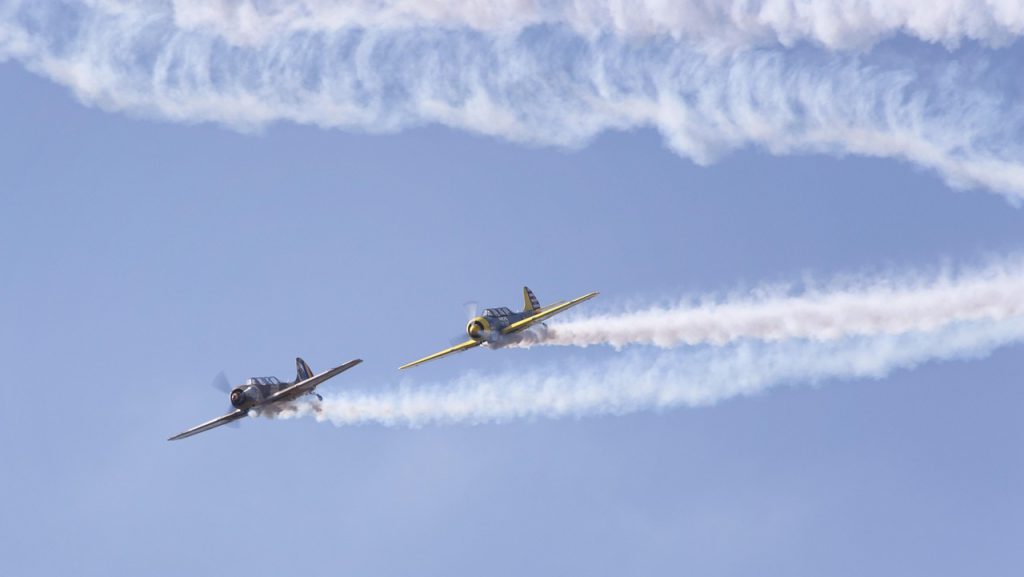
Team performances are only one part of a full airshow. Depending on the event, the program may include civilian aerobatic pilots, historic aircraft, parachute teams or demonstrations by individual military aircraft. At Apple Valley, the calendar lists the Golden Knights, while the Amigo Airsho pairs the Blue Angels with the parachute team; the mix of acts can give a day a varied pace rather than making it a single long jet demonstration.
Watching a performance with an aviation-minded eye can make the experience richer. Formation work depends on discipline, communication and precise spacing, while solo maneuvers highlight control and energy management. Even from the crowd line, spectators can notice how the sound, aircraft position and timing change from one sequence to another; the most memorable moment may be a quiet pass or a formation transition, not simply the loudest maneuver.
Airshows also connect modern performance with the history of flight. A vintage aircraft appearance offers a different kind of spectacle from a contemporary jet, and seeing a classic transport aircraft in the air can prompt interest in the routes and roles that shaped commercial aviation. Readers curious about the Douglas DC-3’s enduring story can explore this account of the DC-3 and the development of air travel, a useful companion to a heritage-focused display.
Because flight programs depend on weather and aircraft readiness, it is wise to treat the published lineup as a guide rather than an unchangeable promise. Check official event updates before leaving and again on the day if possible. A flexible spectator gets more from the full program, whether the highlight is a famous team, a historic aircraft or an unexpected moment between scheduled acts.
Airshow Tickets, Base Access and a More Comfortable Show Day
Choosing an event is only part of planning; entry, transport and comfort can determine how much of the day a visitor actually enjoys. Airshow tickets vary by organizer, and some events offer general admission alongside paid seating or premium viewing areas. Many military open houses have historically offered free general admission, but visitors should confirm current arrangements rather than assuming that entry, parking or special seating will cost nothing.
Military-base events require particular attention to entry rules. Adults may need government-issued photo identification, and security staff may inspect bags or restrict items. The rules can differ from one installation to another, so check the official event page for acceptable identification, prohibited items, gate opening times and whether tickets must be reserved in advance.
Arriving early is often the most effective way to reduce stress. Popular events can create long queues on surrounding roads, and parking delays may mean missing the opening acts. A visitor heading to NAS Jacksonville, for instance, should plan around both the base’s entry process and the likely volume of spectators, rather than calculating the journey solely from normal weekday driving time.
Sound protection deserves equal attention. Jet demonstrations can be extremely loud, particularly for children and anyone sitting close to the flight line. Well-fitting ear defenders or earplugs help make a long day more comfortable, and families should bring protection for every child rather than expecting them to tolerate the noise once the aircraft are overhead.
Sun, wind and long periods outdoors can be just as tiring as the flying. Check the forecast, wear comfortable shoes and bring water in accordance with the venue’s rules. At a waterfront event such as San Francisco Fleet Week, wind and changing conditions may feel different from a sunny airport ramp, so clothing suitable for the local setting is more useful than a one-size-fits-all packing plan.
Think carefully about the viewing position as well. A reserved seat may offer convenience, while general viewing can provide more freedom to move around, depending on the venue. Families with small children may value quick access to shade and facilities; photographers may prefer to research the permitted viewing areas and the sun’s direction before choosing where to stand.
Travel arrangements matter beyond the gate. Review public transport, shuttle service and parking instructions, then save the organizer’s updates where they can be checked easily. If aircraft are a broader interest than the flight program alone, a show can also prompt curiosity about ownership, preservation and the different roles of modern aircraft; this guide to evaluating vintage aircraft offers useful background for visitors drawn to heritage types.
A comfortable show day is built from small decisions made early: confirming the rules, allowing time for traffic and protecting ears from the first demonstration onward. Preparation does not take away the spontaneity of the event; it leaves more attention for the flying.
Beyond the Headliners: Aviation Events and Aircraft Exhibitions
Not every memorable airshow moment comes from a jet team. Many aviation festivals combine flight displays with static aircraft, heritage exhibits and activities that make the event rewarding for visitors with different levels of aviation knowledge. A child might be drawn to a parachute landing, while an experienced enthusiast spends an hour comparing aircraft details on the ground.
Regional events illustrate the breadth of the season. The October calendar includes Culpeper Air Fest, Rose City Airfest in Tyler, SkyFiesta Air Race & Airshow in Las Cruces and the Sky High Aerospace Expo and Fly-In in Maxton. Their names and formats suggest a varied landscape of local gatherings, although exact activities and lineups should be confirmed with each organizer rather than inferred from a listing.
Static aircraft displays can turn a fast-moving spectacle into an opportunity to look closely. Visitors may be able to see how aircraft design reflects a particular mission, era or engineering approach, though access rules vary and some aircraft may remain closed to the public. A conversation with a volunteer or crew member can explain why a preserved airframe matters and how it fits into a wider aviation story.
Historic aircraft provide a link between generations of flight. A vintage transport or trainer can help audiences understand how aviation developed before modern avionics and high-performance jets became familiar sights. Anyone considering the subject beyond a day out can read this overview of vintage aircraft and what distinguishes them, which adds context to the machines on display without confusing an exhibition visit with a purchasing decision.
Some visitors are interested in the aircraft they see not only as history or spectacle, but also as examples of differing design priorities. Business jets, for instance, serve a very different purpose from aerobatic aircraft or military fighters. A comparison of the Cessna Citation and Embraer Phenom families can help explain how performance, cabin design and mission influence aircraft choices in the civil market.
Local events can also make aviation feel more accessible. A fly-in brings pilots and aircraft owners into a community setting, while a larger show may offer a highly choreographed program with major demonstration teams. Neither format is inherently better: one rewards close conversation and discovery, the other delivers scale, sound and carefully timed aerial demonstrations.
When comparing aircraft exhibitions, consider the whole day rather than the headline alone. Check whether the venue publishes a ground-display plan, whether demonstrations are scheduled throughout the afternoon and whether facilities suit the people traveling with you. A balanced program gives spectators time to look up, explore the flight line and learn something new between performances.
That variety is why air shows appeal well beyond specialist audiences. They bring living aviation history, present-day engineering and community activity into one place, making each event a different way to encounter flight.