Glider-to-Airplane Transition: What Changes When the Engine Starts?
A glider and a powered airplane share the same basic relationship with the air: wings generate lift as the aircraft moves through it, and pilots use coordinated controls to manage direction, pitch, and roll. The important difference is how each aircraft gets and manages its energy. A glider has no engine providing continuous thrust, so it must convert altitude into forward movement and seek rising air to climb. An airplane can use engine power to accelerate, climb, and maintain altitude without relying on atmospheric lift.
Consider a fictional student pilot, Maya, who has spent a season flying club sailplanes. She has learned to keep a mental picture of nearby landing fields, read the shape of cumulus clouds, and circle carefully in a thermal. When she begins airplane lessons, those habits remain valuable, but the cockpit asks her to manage new sources of energy and workload. The engine is not simply a convenience; it adds systems, procedures, and decisions to almost every phase of flight.
Shared aerodynamic principles, different energy strategies
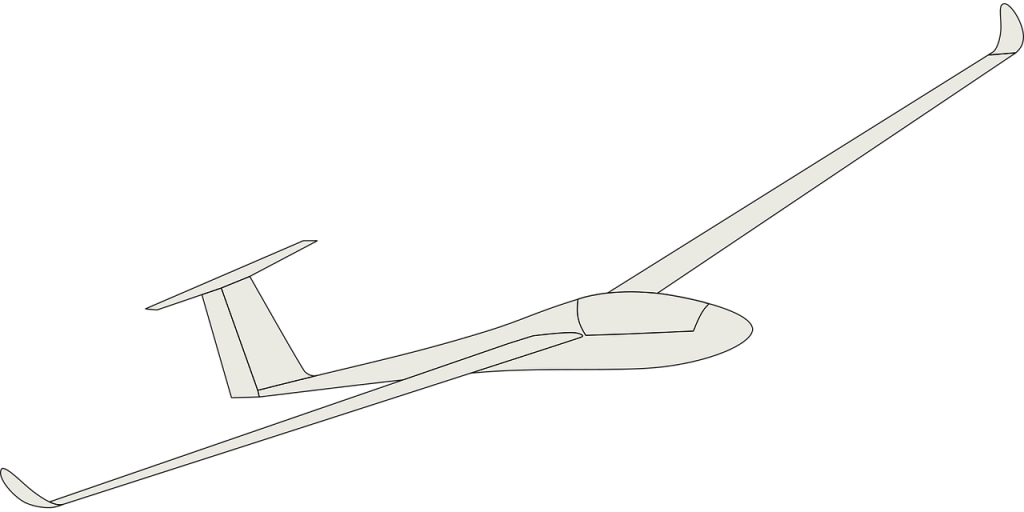
Both aircraft depend on aerodynamic principles such as lift, drag, and stability. A glider’s long, slender wings are designed to reduce drag and lose altitude slowly, while many training airplanes balance efficiency with useful speed, predictable handling, and the ability to carry a practical load. The shapes are not absolute rules: modern powered aircraft can have efficient wings, and some gliders carry auxiliary engines, but their usual design priorities remain distinct.
In still air, a glider gradually descends as it travels forward. Its pilot watches the variometer, airspeed, wind, and terrain, looking for thermals, ridge lift, or mountain wave to regain altitude. An airplane’s engine supplies thrust, allowing the pilot to sustain flight or climb when the surrounding air is not rising. That does not make powered flight independent of weather; wind, turbulence, visibility, and icing still affect safe operation.
For Maya, the first airplane lesson changes the question she asks herself. In a sailplane, she may wonder whether a thermal can extend the flight; in an airplane, she must also consider engine settings, fuel, temperatures, and the aircraft’s approved operating limits. The two disciplines meet in the same physics, but they ask the pilot to manage different energy accounts.
Glider flight is not a lesser form of flight
People sometimes describe gliding as “not really flying” because there is no engine pushing the aircraft along. That description misses the central fact: the wings still generate lift, and the pilot still controls a flying aircraft. In aviation, gliding can also describe the descent of a powered airplane after an engine failure. Learning how to glide is therefore relevant to airplane pilots, even though a sailplane is much more efficient at covering distance without power.
A glider pilot may release from an aerotow at a few thousand feet, then spend the next hour making decisions about lift and reachable terrain. A powered-aircraft pilot may instead climb to a planned altitude, navigate to a destination, and descend using engine power as required. Neither flight is effortless, and neither makes the other obsolete. The contrast is a useful starting point for understanding the glider-to-airplane transition: the pilot carries over judgment and control skills, while learning a new relationship with propulsion.
Pilot Training Pathways: Skills That Transfer from Glider to Airplane
Pilot training pathways are not identical across aircraft categories, but experience in one can provide a strong foundation for another. A glider student learns to coordinate the controls, maintain a target airspeed, recognize changing air movement, and make a landing plan early. Those lessons are directly useful in an airplane. The transition is not a shortcut around training, however; airplane instruction must address the engine, aircraft systems, powered takeoffs, and the operating environment specific to the chosen airplane.
Maya’s glider instructor taught her to make small, deliberate control inputs and to notice when the aircraft’s energy state was changing. In airplane lessons, she finds that coordinated turns and disciplined airspeed control feel familiar. Yet she initially focuses too much on the engine gauges and not enough on the outside picture. Her instructor asks her to divide attention: scan the horizon and traffic, control the airplane, then check instruments and systems at appropriate moments.
What glider experience contributes
Glider training often develops precise stick-and-rudder control because the pilot must preserve energy rather than use engine power to compensate for poor planning. A student learns to judge approach angles, manage airspeed, and select a landing area while there is still time to adjust. These abilities can support airplane training, particularly during traffic-pattern work and emergency exercises.
Weather interpretation is another transferable strength. A soaring pilot who has studied thermals, wind over terrain, and cloud development may be comfortable observing the atmosphere. In powered aviation, that awareness remains useful, although the student must also learn how weather affects takeoff performance, turbulence, visibility, route choices, and fuel planning. The same cloud that signals lift to a soaring pilot can also indicate changing conditions that matter to an airplane’s safe operation.
Communication and navigation also require fresh practice. Some glider operations take place at familiar local sites with procedures that differ from those at a busy controlled airport. An airplane student may need to learn radio phraseology, airspace boundaries, chart use, navigation equipment, and traffic-pattern conventions. Familiarity with flight does not automatically create familiarity with every aviation environment.
Where airplane instruction must begin anew
Powered flight introduces a new set of tasks: starting and monitoring the engine, using carburetor heat where applicable, managing fuel, understanding electrical and vacuum systems if installed, and responding to system malfunctions. The exact equipment varies by aircraft, so training must be based on the airplane’s manuals and limitations rather than assumptions carried over from a glider cockpit.
Takeoffs are another major change. A glider typically reaches flying speed through a winch launch or tow, with the pilot following specific procedures and coordinating a release. An airplane pilot controls a powered ground roll, checks engine indications, rotates at an appropriate speed, and establishes a climb profile. The airplane may have an engine, but that does not remove the need for careful planning; runway length, density altitude, aircraft weight, and wind all influence performance.
Cross-country work also shifts in emphasis. Glider pilots constantly evaluate glide range and potential landing sites, while airplane pilots plan routes, fuel reserves, alternates, and airspace transitions. Good glider habits make the airplane student more alert to consequences, but each aircraft category demands its own practice. The most effective transition preserves sound instincts while treating unfamiliar procedures as genuinely new.
Aviation Certification and Aircraft Category Ratings Explained
Aviation certification is tied to the rules of the relevant country and to the aircraft privileges a pilot seeks. A glider certificate or licence demonstrates competence in that category; it does not automatically grant permission to fly powered airplanes. To act as pilot in command of an airplane, a pilot generally needs the applicable airplane privileges, required training and testing, and any relevant class or operational qualifications. The exact route depends on the licensing authority, the student’s existing credentials, and the type of airplane involved.
In the United States, for example, the Federal Aviation Administration distinguishes aircraft categories and classes. Glider privileges and airplane privileges are not interchangeable, and an airplane single-engine land qualification is different from glider privileges. Other national authorities use their own terminology and licensing structures, so a pilot moving between jurisdictions should consult the current rules and an approved instructor rather than rely on informal summaries.
Ratings, endorsements, and category boundaries
Aircraft category ratings describe broad groups of aircraft, while class ratings further distinguish types within a category where the licensing system uses them. A pilot’s existing glider qualification may be relevant evidence of experience, but it does not erase the learning objectives required for an airplane rating. Training must establish competence in the new aircraft’s normal operations, limitations, emergency procedures, and applicable airspace environment.
The phrase cross-category endorsements can be misleading if it suggests that a simple endorsement converts a glider credential into an airplane licence. In some systems, instructors can record particular training or endorsements under defined rules, but these do not replace whatever certificate, rating, test, or experience the authority requires. The paperwork follows the governing regulations; it is not a universal bridge between categories.
Maya checks the requirements with a flight instructor before scheduling lessons. Together, they identify which of her existing records are relevant, what airplane-specific training is needed, and which examinations or practical tests apply. That conversation prevents a common misunderstanding: a pilot may be experienced and capable in one aircraft while still needing formal qualification to exercise privileges in another.
Flight-hour credit and pilot licensing requirements
Flight-hour credit is another area where broad claims can cause confusion. Some licensing rules may allow certain previous experience to count toward specified requirements, while other requirements must be completed in the target aircraft or with an appropriately qualified instructor. A logbook entry that proves glider experience is not automatically equivalent to airplane dual instruction, solo time, or other required training. Credit depends on the regulation, the kind of time logged, and how the authority defines each requirement.
For that reason, pilots should verify the current pilot licensing requirements directly with the relevant aviation authority or an authorized training provider. In the United States, the FAA publishes handbooks and regulations that explain pilot certification; other countries provide comparable material through their civil aviation authorities. Rules can change, and a pathway that applies to one certificate level or jurisdiction may not apply to another.
For Maya, the practical sequence is straightforward even if the regulations are detailed: confirm eligibility, complete airplane-specific instruction, document experience correctly, demonstrate proficiency, and satisfy the required knowledge and practical assessments. Certification is not a judgment that glider skills lack value. It is a structured way to verify that those skills have been extended to the risks and responsibilities of powered flight.
Flight Experience Equivalence: Launches, Landings, and Cockpit Workload
Flight experience equivalence is best understood as a comparison of learning outcomes, not a claim that every glider hour equals an airplane hour. Time in a sailplane can develop control, judgment, and weather awareness, but the experience differs in how the aircraft launches, how the flight is sustained, and what the pilot must monitor. A careful transition asks which abilities transfer and which must be demonstrated again in the new operating context.
Imagine Maya’s first few airplane circuits after several months of glider flying. She already knows how to hold a stable approach attitude and make coordinated corrections. But the airplane’s higher workload gives her new things to track: engine power, flap settings, radio calls, traffic, and the effects of propeller thrust. Her instructor does not treat prior experience as irrelevant; instead, the instructor uses it as a base and watches for assumptions that could lead to errors.
Launch and takeoff are different practical problems
Gliders reach the air by aerotow, winch launch, or, in some models, self-launching capability. An aerotow requires close attention to the tug’s movement, rope tension, relative position, and release procedures. A winch launch is brief and steep compared with a typical airplane climb, so it demands a distinct technique and prompt responses to abnormal situations. Once released, the glider is on its own unless it has an auxiliary engine.
An airplane takeoff involves a powered acceleration along a runway. The pilot confirms configuration, checks the engine and flight instruments, applies power, maintains directional control, and rotates when the aircraft reaches the appropriate condition. The pilot also considers runway surface, wind, aircraft loading, and the possibility of an aborted takeoff. A glider pilot’s awareness of energy remains valuable, but the mechanics and decision points are not equivalent.
Landing offers both a connection and a contrast. In both aircraft, a stable approach and accurate speed control matter. Glider pilots usually plan to arrive at a chosen landing area with enough height and energy for the pattern, while airplane pilots use a traffic pattern that includes power adjustments and configuration changes. If an airplane engine fails, the pilot may need to adopt a glide approach, but the airplane’s glide performance and checklist differ from those of a sailplane.
Cockpit workload and decision-making
A sailplane cockpit is often relatively simple, though modern models can have sophisticated navigation and flight computers. The variometer is central because it helps the pilot identify rising or sinking air. The pilot’s attention moves between the outside environment, other aircraft, the flight path, and the instruments that support soaring decisions.
Training airplanes commonly add engine indications, fuel quantity, electrical systems, radios, navigation equipment, and sometimes more advanced avionics. A student must learn which indications deserve immediate attention and how to avoid becoming fixated on displays. The extra equipment is not automatically safer or more difficult; it creates tasks that require understanding and practice.
The strongest equivalence is therefore found in habits rather than hours. A glider pilot who consistently scans for traffic, maintains airspeed, and plans ahead brings useful discipline to airplane training. A pilot who assumes that one category’s procedures will work unchanged in another may be surprised. Experience transfers most effectively when it is paired with curiosity about what has changed.
Glider and Airplane Operations: Safety, Costs, and Choosing a Route
Glider and airplane operations create different planning demands, but neither category is automatically safe or unsafe. Risk depends on training, maintenance, weather judgment, operational discipline, and the decisions made before and during flight. A glider pilot must maintain awareness of reachable landing areas because there is no engine available in a conventional sailplane. An airplane pilot has propulsion for routine climbs and diversions, yet must account for engine condition, fuel, and system failures.
Maya joins a local soaring club before deciding whether to begin airplane lessons. The shared aircraft and club launches make it possible to try gliding without owning a sailplane, while experienced members help her learn local procedures. Later, she rents a training airplane for structured lessons, where the instructor emphasizes preflight inspection, checklists, weather limits, and conservative choices. The two settings differ, but each teaches that planning is part of flying rather than paperwork before it.
Safety begins with suitable decisions
Glider pilots plan for landing options throughout a flight, not only when returning to the airfield. They assess wind direction, terrain, obstacles, field size, and the likely effect of changing lift. A thermal can extend a flight, but a pilot should not treat anticipated lift as guaranteed. When conditions weaken, choosing a safe landing early is often better than stretching the glide in pursuit of one more climb.
Powered pilots have their own energy and contingency planning. They monitor fuel and engine indications, respect weather and performance limits, and know how to respond to a malfunction. An engine can provide flexibility, but it is a mechanical system that requires inspection and sound operation. If it stops producing power, the airplane becomes a glider in the broad aerodynamic sense, although its glide ratio, handling, and emergency procedures are different from those of a purpose-built sailplane.
Safety training should therefore connect normal procedures with realistic contingencies. For a glider pilot moving to an airplane, that means learning both how to use the engine correctly and how to respond if it cannot be relied on. For an airplane pilot exploring soaring, it means recognizing that the absence of an engine changes the timing of decisions. In either case, skill is demonstrated by preparation and judgment, not confidence alone.
Cost and purpose shape the best pathway
Gliding can be comparatively affordable when a pilot participates through a club that shares aircraft, launch equipment, and maintenance responsibilities. Costs still include instruction, membership, launches, inspections, and travel to the airfield. A pilot who owns a sailplane may face substantial expenses, so “low cost” depends on the local club, aircraft, and frequency of flying.
Powered airplane training often costs more because fuel, engine maintenance, insurance, and aircraft rental contribute to the hourly rate. The exact price varies widely by region, aircraft, and school, so a prospective student should request a current estimate that includes instruction, aircraft time, examinations, and likely additional practice. Glider experience may strengthen airplane learning, but it should not be treated as a guaranteed reduction in total cost or training time.
The choice ultimately reflects what the pilot wants to do. Gliding suits people drawn to quiet flight, close attention to weather, and the challenge of managing limited energy. Airplanes better support direct travel, carrying useful loads, and operating without depending on rising air, while professional aviation may require specific airplane qualifications. Some pilots pursue both because soaring sharpens their feel for the air and powered flying expands their range of missions. The most useful pathway is the one that matches the pilot’s goals while respecting the distinct demands of each aircraft.