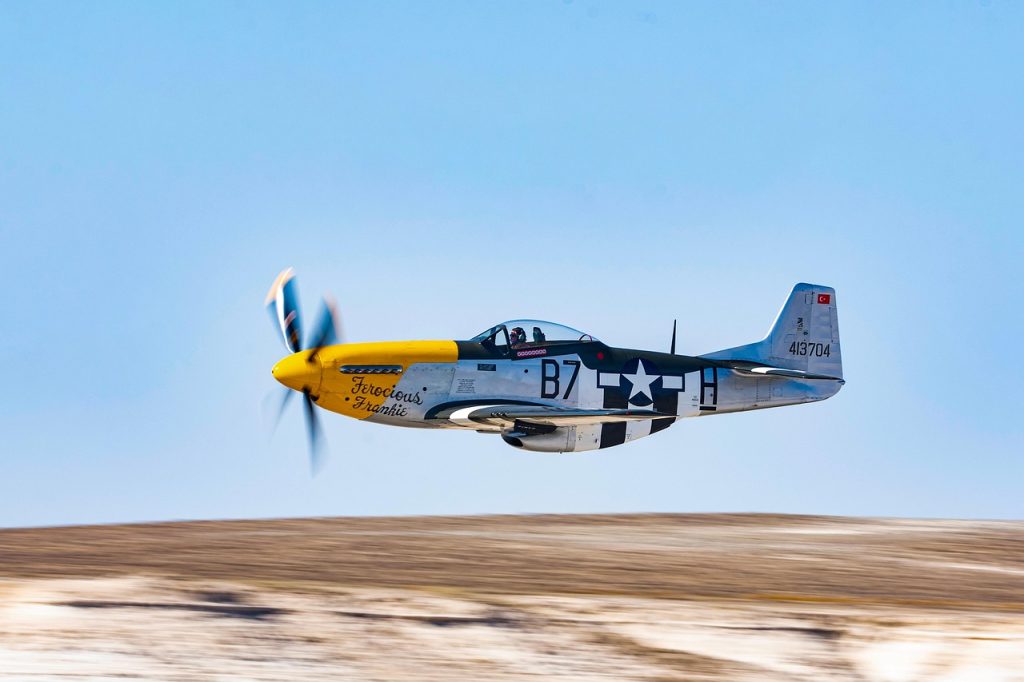
What “Owning a Fighter Aircraft” Really Means
The phrase “owning a fighter aircraft” can suggest a privately operated frontline jet, complete with combat equipment and military performance. Civilian ownership is more limited. In the United States and many other countries, private buyers may acquire certain retired military aircraft, but working weapons and sensitive systems are removed or disabled, and the aircraft must meet the rules that apply to its civilian registration and operation.
That distinction matters because a decommissioned aircraft is not automatically ready to fly. A former military jet might be an airworthy civilian aircraft, a grounded restoration project, or a static display for a hangar or museum. Each status brings different requirements for documentation, storage, insurance, and maintenance. A buyer drawn to a sleek airframe needs to establish which of these they are actually purchasing before discussing price.
Warbirds, trainers, and frontline fighters
Warbirds is a broad enthusiast term, often used for historic military aircraft, including Second World War propeller planes and retired jet trainers. An L-39 Albatros or L-29 Delfin may look and feel like military aviation, but these aircraft were designed for training rather than frontline combat. Two-seat trainers are particularly well suited to civilian flying because an instructor can occupy the second cockpit and retain control.
By contrast, modern frontline aircraft such as the F-16 or F-35 are not ordinary civilian purchases. Military ownership, classified technology, export controls, and national-security restrictions put them outside the practical market for private operators. Even older combat aircraft may be subject to strict transfer conditions, and a buyer cannot assume that demilitarization alone resolves every legal or technical issue.
Display aircraft versus flyable aircraft
A static-display jet can be a remarkable historical object, but it may have no valid civil airworthiness status and may never fly again. Its value depends on provenance, completeness, restoration quality, and the practicalities of moving and securing a large airframe. A flyable aircraft is a different proposition: it needs credible maintenance records, a supportable engine, suitable parts, qualified technicians, and approval under the relevant national system.
For example, a prospective buyer comparing two similar trainers might find that one is less expensive because its engine is near overhaul or its records are incomplete. The lower purchase price can quickly be eclipsed by inspection, transport, repair, and certification costs. The first useful question is therefore not simply “What does it cost?” but “What condition and legal status does that price represent?”
Enthusiasts researching the public side of military aviation can also consult this guide to air shows and aviation events, where historic aircraft are often seen in a setting that makes their scale and operating demands easier to appreciate. Ownership begins with understanding the aircraft as a regulated machine, not just an impressive silhouette.
The Legal Path to Civilian Aircraft Ownership
Aircraft ownership is shaped by several legal systems at once. Aviation authorities oversee registration, airworthiness, pilot qualifications, and flight operations, while military-surplus and export-control rules can affect how an aircraft or its components are transferred across borders. In the United States, the FAA is central to civilian registration and operation; in Europe, EASA and national authorities apply their respective frameworks, while Canada operates under Transport Canada.
These systems do not create a universal permit that makes every retired military aircraft flyable. The aircraft’s history, configuration, registration category, and intended use all matter. A jet may be eligible for a restricted or experimental pathway in one situation and unsuitable for civilian flight in another. Buyers should confirm the exact route with the responsible authority and qualified aviation counsel before money changes hands.
Demilitarization, registration, and airworthiness
Demilitarization usually means that weapons and controlled military equipment have been removed or rendered inoperative. Depending on the aircraft, this may include guns, weapon stations, missile rails, radar functions, or other sensitive systems. The term does not, by itself, establish that the aircraft meets civil airworthiness standards, nor does it guarantee permission to import, register, or fly it.
A former military trainer being considered for civilian use may need extensive inspections and modifications before it can enter service. Its records must support the aircraft’s identity and maintenance history, and its configuration must satisfy the conditions of its registration and operating limitations. If essential records are missing, establishing compliance can become expensive or impossible, even when the airframe appears intact.
Cross-border purchases and due diligence
International transactions add another layer. Export and import controls may apply to the airframe, engines, avionics, technical data, and individual components. An aircraft that can legally be sold in its country of origin may still require licences or end-use assurances before it can be moved elsewhere. Transport, customs, insurance, and local security arrangements also need to be planned in advance.
Imagine a collector finding a retired jet overseas at an attractive price. Before arranging shipment, the buyer would need to verify ownership, export eligibility, configuration, registration prospects, and the availability of specialist support at the destination. A written inspection by an experienced warbird mechanic can expose issues that photographs and a seller’s description will not reveal.
The sensible sequence is to establish legal eligibility first, technical condition second, and final purchase terms only after both are understood. This is also where a qualified aviation lawyer and an independent maintenance specialist can prevent a promising acquisition from turning into an immovable project. Legal access is not a formality: it defines what the owner may actually do with the aircraft.
What It Takes to Fly a Civilian Warbird
Buying an aircraft does not make its owner qualified to fly it. Pilot licensing is the starting point, but the appropriate credentials depend on the aircraft, the pilot’s experience, the operating rules, and the authority responsible for the registration. A private pilot certificate may be part of the pathway, while a specific type rating, additional endorsements, or differences training may be necessary for a complex or high-performance jet.
There is no single licence that automatically qualifies someone to operate every former military aircraft. A jet trainer can demand a very different skill set from a conventional single-engine airplane. The owner must also understand the aircraft’s limitations, emergency procedures, systems, and operating documentation, rather than relying on general flying experience alone.
Flight training and transition to type
Effective flight training usually progresses in stages. A pilot first builds a strong foundation in conventional aircraft, then gains experience with higher speeds, more demanding energy management, and the specific systems of the chosen jet. Instruction may include ground school, simulator work where available, supervised flights, emergency practice, and a formal check before solo operation is considered.
For example, a pilot accustomed to a light propeller aircraft must learn that a jet can cover distance rapidly and may not slow or turn in the same way. Planning an approach, managing engine response, and maintaining awareness of speed and altitude require careful discipline. A qualified instructor can identify weak habits before they become serious risks in a machine with less margin for casual correction.
Medical fitness and operational judgement
Medical standards depend on jurisdiction and the privileges being exercised, but high-performance flying also calls for honest self-assessment. Vision, cardiovascular health, neck and back issues, medication, fatigue, and stress can all affect safety. The pilot must be prepared to cancel when conditions, personal fitness, maintenance status, or weather fall outside acceptable limits.
Operating a jet also involves more than the cockpit. Flight operations require coordination with airport staff, air traffic control, maintenance personnel, insurers, and sometimes specialist ground crews. Some aircraft need specific fuel, equipment, or runway conditions, and local airspace rules may restrict aerobatics or supersonic flight. A capable owner plans around these limits instead of treating them as inconveniences.
Military aviation has long depended on structured training and disciplined procedures; civilian operators benefit from the same approach. A careful transition plan, recurrent instruction, and conservative decision-making are more valuable than confidence alone. For anyone considering a ride before pursuing ownership, it is important to distinguish a supervised passenger experience from the qualifications needed to serve as pilot-in-command.
Even a well-trained pilot remains dependent on the condition of the aircraft, which makes maintenance the next defining part of ownership. Flying skill and mechanical readiness must develop together.
Maintenance, Operating Costs, and the Ownership Commitment
The purchase price is only the opening figure in a warbird budget. A jet requires routine inspections, engine care, specialist labour, suitable hangar space, insurance, and access to parts that may be scarce or difficult to certify. The older the aircraft and the more specialised its systems, the more important it becomes to understand the support network before purchase.
Published market estimates vary widely with condition and provenance. Older trainers such as an L-29 or Strikemaster may sometimes be advertised in the low hundreds of thousands of dollars, while an L-39 in good flying condition can command substantially more. Larger or rarer types, such as a TA-4J or Saab Draken, may involve prices in the millions, often before refurbishment. These are broad indications, not dependable valuations of any specific aircraft.
Hourly costs and reserve planning
Fuel consumption and maintenance drive the cost of every flight. Owners of L-39s have reported operating estimates around USD 1,200 to 1,500 per flight hour in some circumstances, but actual costs can be higher depending on fuel prices, reserves, maintenance findings, and the aircraft’s condition. Engine overhauls, major inspections, and unexpected component failures can create large bills even in a year with relatively few flights.
A responsible budget includes money set aside for work that is not due today but will eventually be required. An aircraft may appear affordable until an engine limit, inspection finding, or parts shortage changes the calculation. Hangar charges, insurance terms, ferry flights, pilot training, and regulatory work belong in the same ownership plan as the advertised purchase price.
Records, specialists, and reliable support
Maintenance records are evidence of more than past spending. They help establish what work has been done, which components are approaching limits, and whether the aircraft has been maintained in accordance with its approved procedures. A buyer should commission a pre-purchase inspection by a specialist familiar with the type, rather than relying solely on a general aviation mechanic or the seller’s own assessment.
Consider a buyer who acquires an inexpensive aircraft with incomplete engine records. The missing documentation may complicate airworthiness approval, reduce resale value, and force additional inspections or replacement work. By contrast, a more expensive aircraft with traceable records and dependable technical support may prove less costly over time because its risks are visible and manageable.
Maintenance capacity also shapes how often an owner can fly. A rare component may take months to source, while a local specialist may support only a limited number of aircraft. Before signing, the owner should identify who can inspect the jet, where parts come from, and how the aircraft can be transported if it becomes unserviceable away from home. The real measure of affordability is whether the owner can keep the aircraft safely and legally available, not merely put it in a hangar.
Passenger Jet Rides and Practical Alternatives to Ownership
Some aviation enthusiasts want to experience military-style performance without taking on aircraft ownership. Commercially offered rides typically use demilitarized trainers such as the L-39, not current frontline fighters. A qualified pilot handles takeoff, landing, and all critical decisions; some operators may offer a passenger brief control input during suitable portions of the flight, but that is not equivalent to being pilot-in-command.
Prices depend on aircraft, location, flight time, and the manoeuvres included. A short L-39 experience is often quoted in the range of several thousand dollars, with more demanding or unusual flights costing more. The booking price generally covers far less time in the air than the full experience requires: briefing, equipment fitting, safety checks, and post-flight discussion can turn a short sortie into a half-day commitment.
Physical demands and safety screening
Aerobatic flights can expose passengers to several times the force of gravity. At four G, a person’s body feels much heavier; at higher loads, movement becomes difficult and vision may narrow. Operators usually tailor manoeuvres to the passenger and aircraft, but participants should not assume that a jet ride will be comfortable simply because an instructor is aboard.
Medical screening, weight and height limits, and safety briefings vary by operator and aircraft. Conditions such as serious heart disease, uncontrolled blood pressure, recent major surgery, significant neck or spine problems, pregnancy, and severe motion sickness may make participation inappropriate. Passengers should disclose relevant health information, avoid alcohol, follow instructions, and understand the cockpit’s harness and emergency equipment before flight.
Choosing an experience that fits the goal
For someone seeking aerobatic excitement, a civilian stunt aircraft may provide dramatic manoeuvres with a different cost and operational profile. For someone interested in history, a museum visit or an air show offers access to aircraft and knowledgeable crews without the physical demands of a high-G flight. The 2026 air-show calendar and planning resource can help enthusiasts find opportunities to see historic and modern aircraft in person.
Private jet charter serves a different purpose. It does not reproduce a fighter’s manoeuvres, but it can deliver point-to-point travel, a quiet cabin, luggage capacity, and room for companions. It is a practical option for travellers drawn to aviation speed and flexibility rather than a brief, physically intense cockpit experience. The right choice depends on whether the objective is a memorable ride, a historical connection, or useful travel.
Whichever route appeals, a safe decision starts with a clear understanding of the aircraft, the operator, the regulations, and the real commitment involved. A fighter-shaped jet can be inspiring, but responsible aviation is built on preparation long before the wheels leave the runway.